
All Stories

5 Ways rna/genesis Makes Enterprise AI Transformation Easier for Executive Teams
For executive teams, navigating an enterprise AI transformation can feel like managing a high-stakes project with an undefined rulebook. The potential for growth is immense, but so are the challenges of governance, skill…

GaN vs. SiC: Selecting the Right Semiconductor for High-Power Chargers
The choice between Gallium Nitride (GaN) and Silicon Carbide (SiC) semiconductors is critical for designing high-power chargers, with GaN excelling in compact, high-frequency applications and SiC suited for higher voltage and power demands requiring exceptional thermal durability.

A Developer's Guide to Robotic Pose Estimation Algorithms
Robotic pose estimation is crucial for object manipulation in industrial settings, requiring algorithms to determine an object's 6D pose. This guide explores feature-based, multi-view geometric, and deep learning methods, detailing their trade-offs for selecting the optimal approach.

A Developer's Guide to Deterministic Physics in Multiplayer Games
Achieving deterministic physics is crucial for fair and consistent multiplayer games, but standard engines often introduce non-determinism. This guide explores common sources of divergence and architectural solutions like authoritative servers and deterministic lockstep, along with specialized tools.

Comparing AI Agent Architectural Patterns for SaaS Platforms
Integrating AI agents into SaaS platforms requires careful architectural decisions. This article compares key patterns like Single-Agent, Orchestrator-Worker, and Event-Driven architectures, detailing their trade-offs for scalability, complexity, and performance to guide your selection.

What Actually Happens When You Use Fasi Uddin Mir's Reflective Solo-Auditing Framework
For independent game developers and designers, ensuring ethical considerations are woven into the fabric of a project can be a complex, isolated process. The Reflective Solo-Auditing (RSA) Framework, developed by researc…

Omron Unveils Faster, Higher-Payload LD-150 and LD-300 Mobile Robots
Omron Robotics has launched its next-generation LD-150 and LD-300 autonomous mobile robots, designed for heavier transport tasks in industrial settings. These new models offer increased payload capacities, faster speeds, and rapid wireless charging to enhance material flow and operational uptime.

Uber Deploys MCP Gateway, Revealing a Blueprint for Enterprise AI Governance
Uber has deployed its Model Context Protocol (MCP) Gateway, a platform designed to manage AI agent interactions and provide a blueprint for enterprise AI governance. This system utilizes a dual-plane architecture and integrated security to ensure accountability and scalability across thousands of internal services.

How Game Engines Deliver Realistic 3D Sound
Modern game engines create immersive 3D soundscapes using spatial audio technologies like physics-based propagation, HRTFs, and Ambisonics. Developers balance auditory realism with computational performance by combining real-time simulation for dynamic elements with pre-calculated "baked" effects for static environments.
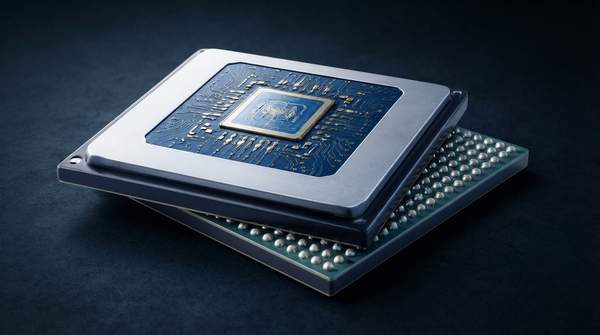
Optimizing RISC-V Firmware: A Guide to Balancing Cost, Power, and Performance
Optimizing RISC-V firmware is critical for embedded systems, focusing on reducing code size to balance cost, power efficiency, and performance. Developers can leverage standard RISC-V extensions and RTOS for tailored solutions.

Website Builder Under the Hood: How Facet Cloud Pulls It Off
For many Kiwi creators, the dream of running an online business can quickly become a technical juggle. Stitching together a website builder, a course platform, a newsletter service, and a payment gateway often leads to a…
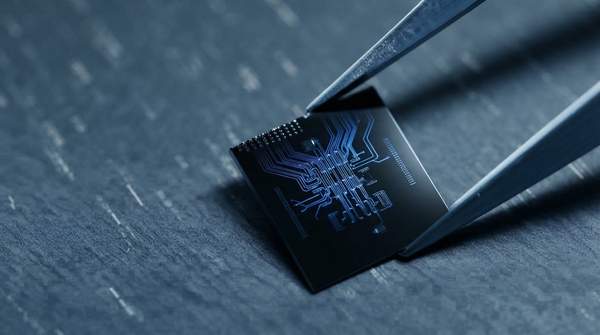
Phonons vs. Photons: Inside the Race to Connect Distant Qubits
Connecting distant qubits is a critical challenge for building scalable quantum computers, with researchers exploring two main strategies: phononic links using sound-like vibrations and photonic interconnects using particles of light.

Quantum Simulation Unlocks New Materials by Solving Chemistry's Toughest Problems
Quantum computers are revolutionizing material science by simulating complex quantum mechanical interactions, enabling the design of advanced materials for next-generation technologies. This approach accelerates discovery by predicting material properties before synthesis, overcoming limitations of classical supercomputers.

Base Editing vs. Prime Editing: A Decision Guide for Gene Correction
Base editing and prime editing are advanced CRISPR technologies that precisely correct genetic mutations without double-strand DNA breaks. The choice between them depends on the specific mutation type, required edit scope, and targeting feasibility.

Portal, Catalog, or Golden Path? Understanding Core IDP Components
An Internal Developer Platform (IDP) is an integrated system of components, not a single tool, designed to abstract complexity and enhance developer experience. The article details the three core building blocks—developer portal, software catalog, and golden path templates—explaining their distinct roles and synergistic functions.

Everything Fintech Enterprises Should Know About Hypersign and Modern Compliance
Hypersign provides a comprehensive identity infrastructure platform designed to help enterprises navigate the complexities of modern compliance. As regulations tighten and digital threats evolve, the need for robust iden…

Roadrunner Quantum Lab Opens in Albuquerque, Anchoring New Mexico's Quantum Ecosystem
The Roadrunner Quantum Lab (RQL) has officially opened in Albuquerque, New Mexico, establishing a new hub for quantum computing research and development. This 35,000-square-foot facility is a pivotal component of New Mexico's $450 million quantum development commitment, designed to accelerate commercialization through collaboration with national labs and universities.
Choosing Your Game Engine's Rendering Pipeline: Forward, Deferred, or Tiled/Clustered Forward
Choosing the right real-time 3D rendering pipeline—Forward, Deferred, or Tiled/Clustered Forward—is crucial for game engine performance. This article compares their trade-offs in light handling, transparency, and memory to guide your selection.
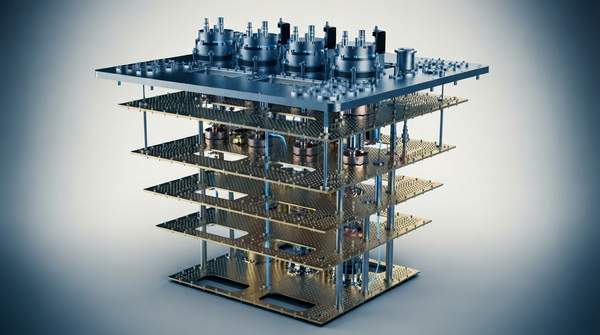
Cryogenic Cooling: Dilution Refrigerators and Pulse Tubes in Quantum Computing
Ultra-low temperatures are fundamental to quantum computing, with dilution refrigerators and pulse tube cryocoolers being key technologies for achieving the extreme cold required. These systems are crucial for preserving qubit coherence, minimizing errors, and enabling the scalability of quantum processors.

Universal Music Group Appoints Spotify AI Veteran Òscar Celma to Drive Discovery and Personalization Strategy
Universal Music Group has appointed former Spotify AI veteran Òscar Celma as Senior Vice President, Applied AI and Machine Learning. Celma will lead UMG's strategy to enhance music discovery, personalization, and fan engagement, reinforcing the company's commitment to supporting human artistry.

Everything Cross-Channel Sellers Should Know About MarginMind and Autonomous Repricing
Autonomous repricing is a strategy that uses AI to automatically adjust product prices in real-time based on market conditions, but for cross-channel sellers, its true value lies in protecting profit margins. Platforms l…

Comparing Quantum Computing Architectures: Superconducting, Trapped Ion, and Photonic Trade-offs
This article compares superconducting, trapped ion, and photonic quantum computing architectures, detailing their distinct trade-offs in performance, scaling, and operating conditions. Understanding these differences is crucial for quantum software engineers and researchers to make informed decisions about algorithm selection and development.

Outbound Robots Transform Beverage Warehouse Logistics Amidst Rising Challenges
Beverage warehouses are increasingly adopting flexible outbound robotics to address operational challenges and labor shortages. This strategic shift focuses on automating end-of-line tasks, enhancing efficiency and worker safety.

Quantum Annealing vs. Gate-Based Quantum Computing: A Decision Framework
Quantum annealing and gate-based quantum computing represent distinct approaches to leveraging quantum mechanics, each with unique strengths and limitations. Understanding these differences is crucial for developers to select the optimal paradigm for specific computational problems.