
Kaleo Kekoa
Editorial byline
Kaleo Kekoa is an editorial byline for Coders & Pixels, with a focus on Hardware & Gadgets, Robotics & Automation, Gaming & Interactive Media. Biographical credentials and external profiles are published only after verification.
Learn more about our editorial process and use of automation in our AI & Automation disclosure.
Coverage Areas
Latest Articles

How Open-World Games Stay Fast: Asset Streaming, LODs, and the Nanite Shift
Open-world games achieve smooth performance through asset streaming, which loads data only when needed, and Level of Detail (LOD) systems that render objects at varying fidelity. Modern techniques like Unreal Engine 5's Nanite further automate these optimizations by virtualizing geometry.
Oct 21, 2026 · 6 min read

Blend Trees, State Machines, and IK: Choosing the Right Animation System for Your Character
Character animation systems often combine blend trees/spaces for continuous motion, state machines for discrete actions, and inverse kinematics for environmental interaction. Choosing the right system depends on your game's specific movement needs and development costs.
Oct 21, 2026 · 6 min read
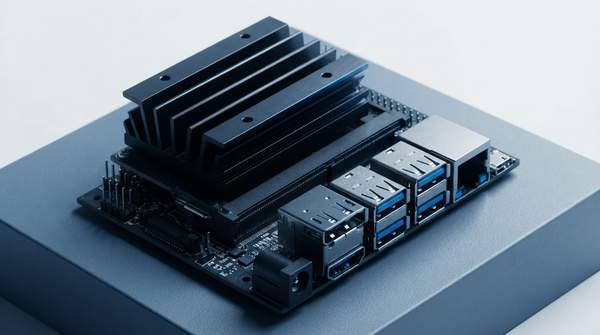
Quantization, Pruning, or Distillation: Choosing the Right Optimization for Your Edge AI Model
Edge AI models require optimization techniques like quantization, pruning, and knowledge distillation to balance performance and resource constraints. This article guides engineers in selecting the most effective strategy based on project priorities such as memory, speed, or accuracy.
Oct 20, 2026 · 5 min read

HBM and FOWLP in AI Accelerators: Two Different Answers to the Bandwidth and Thermal Problem
HBM provides essential memory bandwidth for AI accelerators through 3D stacking, whereas FOWLP offers a cost-effective, compact integration platform for heterogeneous dies. The choice between them depends on whether raw bandwidth or cost, form factor, and I/O flexibility is the dominant design constraint.
Oct 19, 2026 · 5 min read
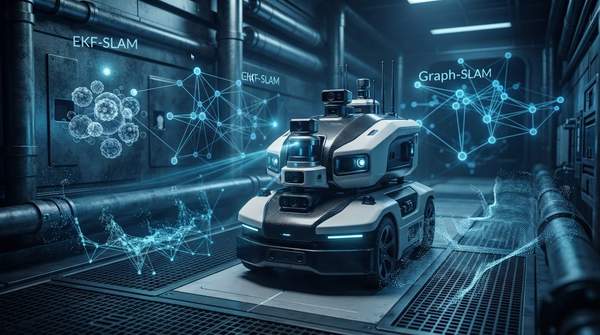
EKF, Graph, or Visual SLAM: Which Algorithm Family Fits Your Robot's Environment
This article compares EKF-SLAM, Graph-SLAM, and Visual SLAM, detailing their trade-offs between computational cost and map consistency. It guides robot developers in selecting the most suitable algorithm family based on environment scale, available resources, and desired map accuracy.
Oct 16, 2026 · 6 min read

Digital Twins for Industrial Robots: Architecture, Modeling Choices, and the Path to Predictive Maintenance
A digital twin for an industrial robot is a high-fidelity simulation that mirrors the physical machine, enabling predictive maintenance by detecting deviations and simulating fault conditions. The most practical approach combines physics-based modeling for generating synthetic fault data with data-driven machine learning for real-time monitoring, overcoming the challenge of scarce real-world fault data.
Oct 15, 2026 · 5 min read

Lumen vs. SDFGI: How Two Real-Time Global Illumination Systems Solve Indirect Lighting Differently
Unreal Engine 5's Lumen and Godot 4's SDFGI offer real-time global illumination without lightmaps, but use distinct methods impacting dynamic scene support and performance. Developers must choose based on project needs for dynamism, target hardware, and acceptable overhead.
Oct 14, 2026 · 5 min read
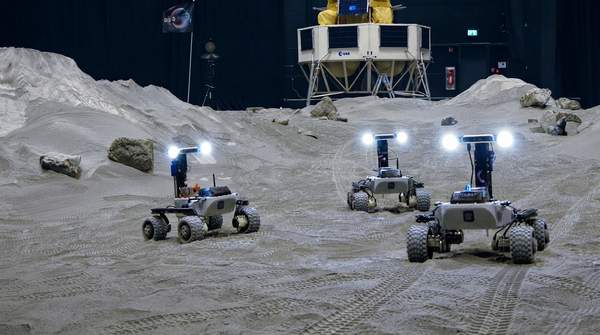
How to Choose the Right Multi-Robot Coordination Strategy
Choosing the right multi-robot coordination strategy (centralized, decentralized, or hybrid) for industrial environments involves balancing performance optimization with system robustness and scalability. The article details the trade-offs of each approach to help make an informed decision based on specific operational needs.
Oct 12, 2026 · 5 min read

Kawasaki to Launch Compact, High-Speed CP110L Palletizer in North America
Kawasaki Robotics is introducing its new CP110L high-speed palletizer to North America, designed for facilities with space constraints. This compact robot offers a 110 kg payload and high throughput, targeting end-of-line automation needs.
Oct 9, 2026 · 3 min read

GaN vs. SiC: Selecting the Right Semiconductor for High-Power Chargers
The choice between Gallium Nitride (GaN) and Silicon Carbide (SiC) semiconductors is critical for designing high-power chargers, with GaN excelling in compact, high-frequency applications and SiC suited for higher voltage and power demands requiring exceptional thermal durability.
Oct 9, 2026 · 4 min read
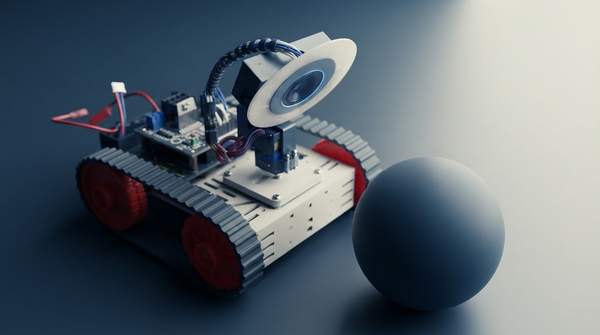
A Developer's Guide to Robotic Pose Estimation Algorithms
Robotic pose estimation is crucial for object manipulation in industrial settings, requiring algorithms to determine an object's 6D pose. This guide explores feature-based, multi-view geometric, and deep learning methods, detailing their trade-offs for selecting the optimal approach.
Oct 8, 2026 · 4 min read

How Game Engines Deliver Realistic 3D Sound
Modern game engines create immersive 3D soundscapes using spatial audio technologies like physics-based propagation, HRTFs, and Ambisonics. Developers balance auditory realism with computational performance by combining real-time simulation for dynamic elements with pre-calculated "baked" effects for static environments.
Oct 7, 2026 · 3 min read

Optimizing RISC-V Firmware: A Guide to Balancing Cost, Power, and Performance
Optimizing RISC-V firmware is critical for embedded systems, focusing on reducing code size to balance cost, power efficiency, and performance. Developers can leverage standard RISC-V extensions and RTOS for tailored solutions.
Oct 7, 2026 · 4 min read

A Developer's Guide to Deterministic Physics in Multiplayer Games
Achieving deterministic physics is crucial for fair and consistent multiplayer games, but standard engines often introduce non-determinism. This guide explores common sources of divergence and architectural solutions like authoritative servers and deterministic lockstep, along with specialized tools.
Oct 6, 2026 · 6 min read
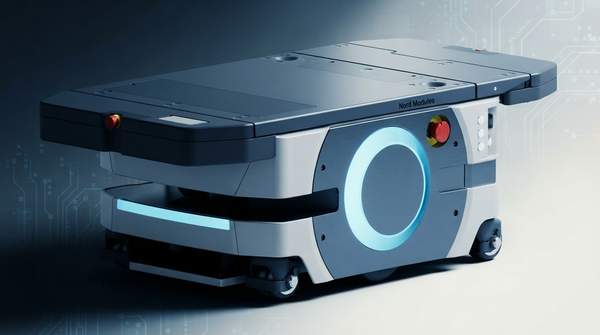
Omron Unveils Faster, Higher-Payload LD-150 and LD-300 Mobile Robots
Omron Robotics has launched its next-generation LD-150 and LD-300 autonomous mobile robots, designed for heavier transport tasks in industrial settings. These new models offer increased payload capacities, faster speeds, and rapid wireless charging to enhance material flow and operational uptime.
Oct 3, 2026 · 2 min read

Hybrid Ray Tracing vs. Full Path Tracing in Game Engines
Game engine developers must choose between hybrid ray tracing and full path tracing for real-time rendering, balancing visual fidelity, performance, and development complexity to meet project goals.
Oct 1, 2026 · 4 min read
Choosing Your Game Engine's Rendering Pipeline: Forward, Deferred, or Tiled/Clustered Forward
Choosing the right real-time 3D rendering pipeline—Forward, Deferred, or Tiled/Clustered Forward—is crucial for game engine performance. This article compares their trade-offs in light handling, transparency, and memory to guide your selection.
Sep 30, 2026 · 6 min read

How 3D Stacking and Chiplets Drive Performance in HPC and AI Accelerators
Advanced packaging technologies like 3D stacking and chiplets are critical for enhancing performance scaling and heterogeneous integration in modern HPC and AI accelerators. These innovations address limitations of traditional 2D scaling by enabling denser integration, higher bandwidth, and improved power efficiency.
Sep 28, 2026 · 6 min read
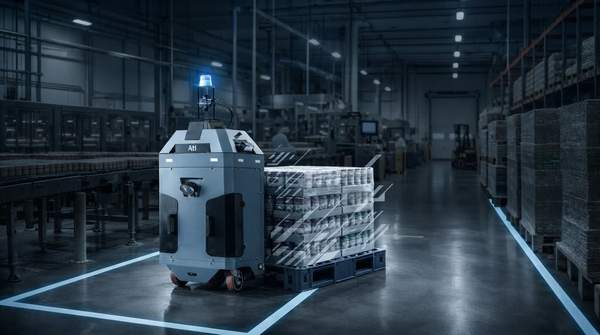
Outbound Robots Transform Beverage Warehouse Logistics Amidst Rising Challenges
Beverage warehouses are increasingly adopting flexible outbound robotics to address operational challenges and labor shortages. This strategic shift focuses on automating end-of-line tasks, enhancing efficiency and worker safety.
Sep 28, 2026 · 3 min read

HDB to Scale Robotics and Automation in BTO Construction from 2027
The Housing & Development Board (HDB) will significantly expand the use of robotics and automation in Build-To-Order (BTO) construction sites starting in 2027. This strategic move aims to boost construction productivity and reduce manpower needs through technologies like floor screeding robots and smart hoists.
Sep 25, 2026 · 2 min read