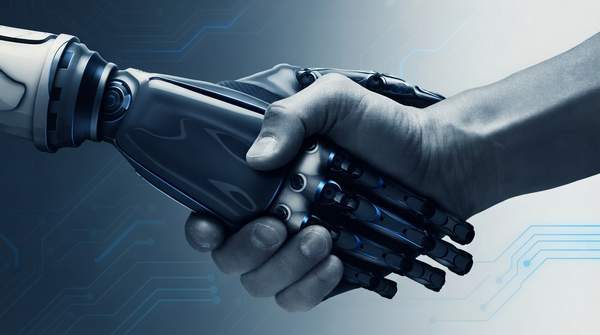
Choosing a human-robot teaming architecture is a trade-off between task complexity, safety requirements, and the efficiency you want to unlock. The published research points to a spectrum of collaboration models — from supervised autonomy, where a person oversees an independently executing robot, through shared autonomy, where control is genuinely joint, to adaptive collaboration, where robots respond to real-time conditions and human input. The right choice depends on how much human intervention your tasks require, how variable your environment is, and which enabling technologies you can realistically deploy.
Supervised Autonomy: Human Oversight, Robot Execution
Supervised autonomy is the most established architectural model in human-robot collaboration. The robot operates with meaningful independence on its assigned work, while the human stays in an oversight role — issuing high-level commands, handling exceptions, and validating outcomes rather than directing every movement.
A review of human-robot collaboration in architectural fabrication by Tahmures Ghiyasi and Ali Ghazvinian describes how supervised autonomy "can expand the possibilities of material efficiency and sustainable design while still requiring human involvement to mediate variability and validate outcomes." In other words, the model's value lies in freeing the person from detailed, continuous control while preserving human judgment for the moments that matter.
This model suits manufacturing tasks where the work is largely routine or predefined, but variability and quality assurance still need a human in the loop. Priyanka Bhore and colleagues, in a chapter on adaptive human-robot collaboration in multi-robot environments, frame this as a balance between "human oversight with robot independence," and distinguish human-in-the-loop control, where a person is continuously involved in execution, from human-on-the-loop architectures, where the person supervises at a higher level. Supervised autonomy leans toward the latter: the person manages exceptions, not motion commands.