As the quest to build large-scale, fault-tolerant quantum computers accelerates, researchers face a fundamental scaling challenge: controlling millions of quantum bits, or qubits, which must operate at temperatures colder than deep space. The solution emerging as a critical enabling technology is the development of cryogenic complementary metal-oxide-semiconductor (cryo-CMOS) circuits. By allowing control electronics to move from room-temperature racks into the cryogenic environment alongside the qubits, cryo-CMOS integrated circuits directly address the wiring, power, and complexity bottlenecks that have constrained the growth of quantum processors, particularly for systems based on superconducting and semiconductor qubits.
The Imperative for Cryo-CMOS in Quantum Computing
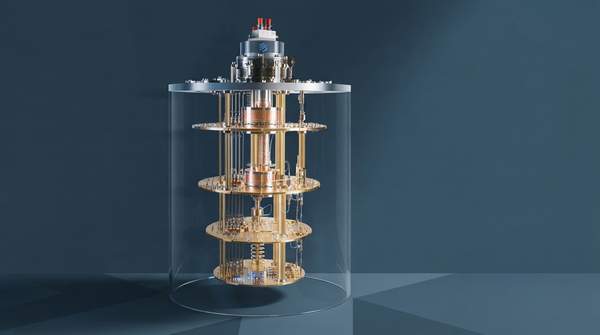
The development of practical, large-scale quantum computers is fundamentally an integration problem. According to the IEEE Solid-State Circuits Society, scaling a fault-tolerant machine to the millions of qubits needed for useful algorithms presents a "daunting challenge." A primary obstacle, identified in multiple technical analyses, is the "wiring bottleneck." Conventional systems rely on a vast number of coaxial cables running from room-temperature control hardware down through the stages of a dilution refrigerator to the quantum processor. This approach is not scalable; for every qubit, multiple control and readout lines are needed, and the sheer volume of wires introduces a significant heat load into the cryogenic system, limiting the number of qubits that can be effectively managed and threatening their delicate quantum states.
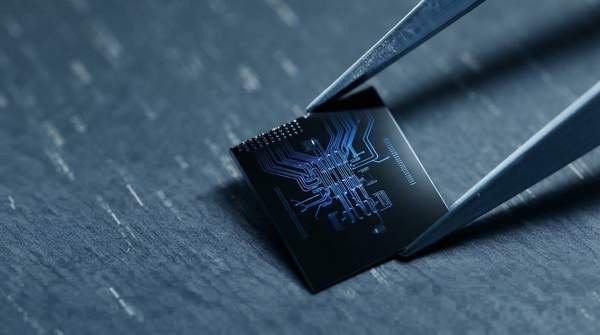
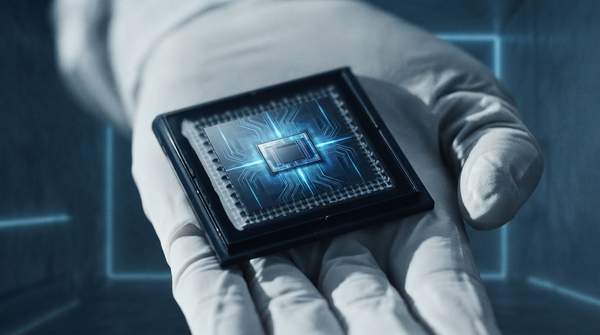
Cryo-CMOS technology offers a path to circumvent this critical bottleneck. By designing CMOS chips—the same technology found in modern classical computers—to function reliably at cryogenic temperatures around 4 Kelvin, engineers can place the control and readout electronics in close proximity to the qubits. This co-location dramatically reduces the complexity and heat load of the interconnects between temperature stages. Instead of thousands of individual wires penetrating the cryostat, a few digital lines can communicate with a complex cryo-CMOS System-on-Chip (SoC) that manages a large array of qubits, paving the way for the dense, integrated control systems required for future quantum computing architectures.